Saint Hugh of Grenoble

5

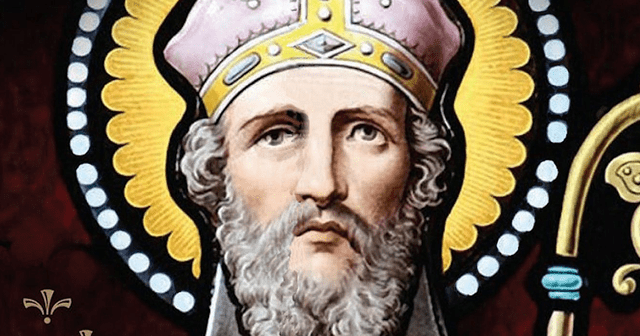
Hugh of Grenoble, bishop from 1052 to 1132, found himself navigating a minefield of corruption upon assuming his role. The ecclesiastical landscape was marred by the sale of Church offices, disregard for clerical celibacy, secular appropriation of Church assets, and widespread religious apathy or ignorance. Barely two years into his bishopric, Hugh sought refuge in monastic life, only to be summoned back by the pope to spearhead reform.

It’s perhaps his deep Church devotion and formidable resolve that rendered Hugh an effective reformist. He stood unwavering in disputes pitting Church against state, staunchly backing the papacy. Hugh’s preaching was marked by eloquence. He undertook the restoration of his cathedral, initiated urban enhancements in his diocese, and endured a period of exile with grace.

Hugh’s legacy is notably linked to his support of St. Bruno and the founding of the Carthusian Order.

Passing in 1132, Hugh’s sainthood was affirmed by canonization merely two years posthumously.

Photo credit: Public Domain via Wikimedia Commons
Love uCATHOLIC?
Get our inspiring content delivered to your inbox every morning - FREE!

Mass Readings for April 1, 2026

0

Isaiah 50:4-9
Psalm 69:8-10, 21-22, 31, 33-34
Matthew 26:14-25

Isaiah 50:4-9
(4) The Lord has given me a learned tongue, so that I would know how to uphold with a word, one who has weakened. He rises in the morning, he rises to my ear in the morning, so that I may heed him like a teacher (5) The Lord God has opened my ear. And I do not contradict him. I have not turned back (6) I have given my body to those who strike me, and my cheeks to those who plucked them. I have not averted my face from those who rebuked me and who spit on me (7) The Lord God is my helper. Therefore, I have not been confounded. Therefore, I have set my face like a very hard rock, and I know that I will not be confounded (8) He who justifies me is near. Who will speak against me? Let us stand together. Who is my adversary? Let him approach me (9) Behold, the Lord God is my helper. Who is the one who would condemn me? Behold, they will all be worn away like a garment; the moth will devour them

Psalm 69:8-10, 21-22, 31, 33-34
(8) For because of you, I have endured reproach; confusion has covered my face (9) I have become a stranger to my brothers and a sojourner to the sons of my mother (10) For zeal for your house has consumed me, and the reproaches of those who reproached you have fallen upon me (21) All those who trouble me are in your sight; my heart has anticipated reproach and misery. And I sought for one who might grieve together with me, but there was no one, and for one who might console me, and I found no one (22) And they gave me gall for my food. And in my thirst, they gave me vinegar to drink (31) I will praise the name of God with a canticle, and I will magnify him with praise (33) Let the poor see and rejoice. Seek God, and your soul will live (34) For the Lord has heard the poor, and he has not despised his prisoners

Matthew 26:14-25
(14) Then one of the twelve, who was called Judas Iscariot, went to the leaders of the priests (15) and he said to them, “What are you willing to give me, if I hand him over to you?” So they appointed thirty pieces of silver for him (16) And from then on, he sought an opportunity to betray him (17) Then, on the first day of Unleavened Bread, the disciples approached Jesus, saying, “Where do you want us to prepare for you to eat the Passover? (18) So Jesus said, “Go into the city, to a certain one, and say to him: ‘The Teacher said: My time is near. I am observing the Passover with you, along with my disciples.’ (19) And the disciples did just as Jesus appointed to them. And they prepared the Passover (20) Then, when evening arrived, he sat at table with his twelve disciples (21) And while they were eating, he said: “Amen I say to you, that one of you is about to betray me. (22) And being greatly saddened, each one of them began to say, “Surely, it is not I, Lord? (23) But he responded by saying: “He who dips his hand with me into the dish, the same will betray me (24) Indeed, the Son of man goes, just as it has been written about him. But woe to that man by whom the Son of man will be betrayed. It would be better for that man if he had not been born. (25) Then Judas, who betrayed him, responded by saying, “Surely, it is not I, Master?” He said to him, “You have said it.

Love MASS READINGS?
Subscribe To Get The Daily Mass Readings Delivered Directly To Your Email.

Prayer Petitions for April 1, 2026

0

Please comment below to leave your prayer request. As your request will be prayed for, please also pray for the petitions of others! Remember in your prayers, those in purgatory, all those suffering around the world, and for the intentions of the Pope! Lord, hear our prayer!

Love uCATHOLIC?
Get our inspiring content delivered to your inbox every morning - FREE!

Saint Benjamin the Deacon

13

The Christians in Persia had enjoyed twelve years of peace during the reign of Isdegerd, son of Sapor III, when in 420 it was disturbed by the indiscreet zeal of Abdas, a Christian Bishop who burned the Temple of Fire, the great sanctuary of the Persians. King Isdegerd threatened to destroy all the churches of the Christians unless the Bishop would rebuild it.

As Abdas refused to comply, the threat was executed; the churches were demolished, Abdas himself was put to death, and a general persecution began which lasted forty years. Isdegerd died in 421, but his son and successor, Varanes, carried on the persecution with great fury. The Christians were submitted to the most cruel tortures.

Among those who suffered was St. Benjamin, a Deacon, who had been imprisoned a year for his Faith. At the end of this period, an ambassador of the Emperor of Constantinople obtained his release on condition that he would never speak to any of the courtiers about religion.

St. Benjamin, however, declared it was his duty to preach Christ and that he could not be silent. Although he had been liberated on the agreement made with the ambassador and the Persian authorities, he would not acquiesce in it, and neglected no opportunity of preaching. He was again apprehended and brought before the king. The tyrant ordered that reeds should be thrust in between his nails and his flesh and into all the tenderest parts of his body and then withdrawn. After this torture had been repeated several times, a knotted stake was inserted into his bowels to rend and tear him. The martyr expired in the most terrible agony about the year 424.

Photo credit: Public Domain via Wikimedia Commons
Love uCATHOLIC?
Get our inspiring content delivered to your inbox every morning - FREE!

Mass Readings for March 31, 2026

0

Isaiah 49:1-6
Psalm 71:1-6, 15, 17
John 13:21-33, 36-38

Isaiah 49:1-6
(1) Pay attention, you islands, and listen closely, you far away peoples. The Lord has called me from the womb; from the womb of my mother, he has been mindful of my name (2) And he has appointed my mouth as a sharp sword. In the shadow of his hand, he has protected me. And he has appointed me as an elect arrow. In his quiver, he has hidden me (3) And he has said to me: “You are my servant, Israel. For in you, I will glory. (4) And I said: “I have labored toward emptiness. I have consumed my strength without purpose and in vain. Therefore, my judgment is with the Lord, and my work is with my God. (5) And now, says the Lord, who formed me from the womb as his servant, so that I may bring back Jacob to him, for Israel will not be gathered together, but I have been glorified in the eyes of the Lord and my God has become my strength (6) and so he has said: “It is a small thing that you should be my servant so as to raise up the tribes of Jacob, and so as to convert the dregs of Israel. Behold, I have offered you as a light for the Gentiles, so that you may be my salvation, even to the furthest regions of the earth.

Psalm 71:1-6, 15, 17
(1) A Psalm of David. Of the sons of Jonadab and the former captives. In you, O Lord, I have hoped; do not let me be brought to ruin forever (2) Free me by your justice, and rescue me. Incline your ear to me, and save me (3) Be a God of protection and a place of strength for me, so that you may accomplish my salvation. For you are my firmament and my refuge (4) Rescue me, O my God, from the hand of the sinner, and from the hand of the unjust and those who act against the law (5) For you, O Lord, are my patience: my hope from my youth, O Lord (6) In you, I have been confirmed from conception. From my mother’s womb, you are my protector. In you, I will sing forever (15) My mouth will announce your justice, your salvation all day long. For I have not known letters (17) You have taught me from my youth, O God. And so I will declare your wonders continuously

John 13:21-33, 36-38
(21) When Jesus had said these things, he was troubled in spirit. And he bore witness by saying: “Amen, amen, I say to you, that one among you shall betray me. (22) Therefore, the disciples looked around at one another, uncertain about whom he spoke (23) And leaning against the bosom of Jesus was one of his disciples, the one whom Jesus loved (24) Therefore, Simon Peter motioned to this one and said to him, “Who is it that he is speaking about? (25) And so, leaning against the chest of Jesus, he said to him, “Lord, who is it? (26) Jesus responded, “It is he to whom I shall extend the dipped bread.” And when he had dipped the bread, he gave it to Judas Iscariot, son of Simon (27) And after the morsel, Satan entered into him. And Jesus said to him, “What you are going to do, do quickly. (28) Now none of those sitting at table knew why he had said this to him (29) For some were thinking that, because Judas held the purse, that Jesus had told him, “Buy those things which are needed by us for the feast day,” or that he might give something to the needy (30) Therefore, having accepted the morsel, he went out immediately. And it was night (31) Then, when he had gone out, Jesus said: “Now the Son of man has been glorified, and God has been glorified in him (32) If God has been glorified in him, then God will also glorify him in himself, and he will glorify him without delay (33) Little sons, for a brief while, I am with you. You shall seek me, and just as I said to the Jews, ‘Where I am going, you are not able to go,’ so also I say to you now (36) Simon Peter said to him, “Lord, where are you going?” Jesus responded: “Where I am going, you are not able to follow me now. But you shall follow afterward. (37) Peter said to him: “Why am I unable to follow you now? I will lay down my life for you! (38) Jesus answered him: “You will lay down your life for me? Amen, amen, I say to you, the rooster will not crow, until you deny me three times.

Love MASS READINGS?
Subscribe To Get The Daily Mass Readings Delivered Directly To Your Email.

Prayer Petitions for March 31, 2026

1

Please comment below to leave your prayer request. As your request will be prayed for, please also pray for the petitions of others! Remember in your prayers, those in purgatory, all those suffering around the world, and for the intentions of the Pope! Lord, hear our prayer!

Love uCATHOLIC?
Get our inspiring content delivered to your inbox every morning - FREE!

Saint Peter Regalado

5

Saint Peter Regaldo lived at a very busy time. The Great Western Schism (1378-1417) was settled at the Council of Constance (1414-1418). France and England were fighting the Hundred Years’ War, and in 1453 the Byzantine Empire was completely wiped out by the loss of Constantinople to the Turks. At Peter’s death the age of printing had just begun in Germany, and Columbus’s arrival in the New World was less than 40 years away.

Peter came from a wealthy and pious family in Valladolid, Spain. At the age of 13, he was allowed to enter the Conventual Franciscans. Shortly after his ordination, he was made superior of the friary in Aguilar. He became part of a group of friars who wanted to lead a life of greater poverty and penance. In 1442 he was appointed head of all the Spanish Franciscans in his reform group.

Peter led the friars by his example. A special love of the poor and the sick characterized Peter. Miraculous stories are told about his charity to the poor. For example, the bread never seemed to run out as long as Peter had hungry people to feed. Throughout most of his life, Peter went hungry; he lived only on bread and water.

Immediately after his death on March 31, 1456, his grave became a place of pilgrimage. Peter was canonized in 1746.

Photo credit: Public Domain via Wikimedia Commons
Love uCATHOLIC?
Get our inspiring content delivered to your inbox every morning - FREE!

Mass Readings for March 30, 2026

1

Isaiah 42:1-7
Psalm 27:1-3, 13-14
John 12:1-11

Isaiah 42:1-7
(1) Behold my servant, I will uphold him, my elect, with him my soul is well-pleased. I have sent my Spirit upon him. He will offer judgment to the nations (2) He will not cry out, and he will not show favoritism to anyone; neither will his voice be heard abroad (3) The bruised reed he will not break, and the smoldering wick he will not extinguish. He will lead forth judgment unto truth (4) He will not be saddened or troubled, until he establishes judgment on earth. And the islands will await his law (5) Thus says the Lord God, who created the heavens and expanded it, who formed the earth and all that springs from it, who gives breath to the people in it, and spirit to those walking on it (6) I, the Lord, have called you in justice, and I have taken your hand and preserved you. And I have presented you as a covenant of the people, as a light to the Gentiles (7) so that you may open the eyes of the blind, and lead out the prisoner from confinement and those sitting in darkness from the house of incarceration

Psalm 27:1-3, 13-14
(1) A Psalm of David, before he was sealed. The Lord is my light and my salvation, whom shall I fear? The Lord is the protector of my life, of whom shall I be afraid (2) Meanwhile, the guilty draw near to me, so as to eat my flesh. Those who trouble me, my enemies, have themselves been weakened and have fallen (3) If entrenched armies were to stand together against me, my heart would not fear. If a battle were to rise up against me, I would have hope in this (13) I believe that I shall see the good things of the Lord in the land of the living (14) Wait for the Lord, act manfully; and let your heart be strengthened, and remain with the Lord

John 12:1-11
(1) Then six days before the Passover, Jesus went to Bethania, where Lazarus had died, whom Jesus raised up (2) And they made a dinner for him there. And Martha was ministering. And truly, Lazarus was one of those who were sitting at table with him (3) And then Mary took twelve ounces of pure spikenard ointment, very precious, and she anointed the feet of Jesus, and she wiped his feet with her hair. And the house was filled with the fragrance of the ointment (4) Then one of his disciples, Judas Iscariot, who was soon to betray him, said (5) “Why was this ointment not sold for three hundred denarii and given to the needy? (6) Now he said this, not out of concern for the needy, but because he was a thief and, since he held the purse, he used to carry what was put into it (7) But Jesus said: “Permit her, so that she may keep it against the day of my burial (8) For the poor, you have with you always. But me, you do always not have. (9) Now a great multitude of the Jews knew that he was in that place, and so they came, not so much because of Jesus, but so that they might see Lazarus, whom he had raised from the dead (10) And the leaders of the priests planned to put Lazarus to death also (11) For many of the Jews, because of him, were going away and were believing in Jesus

Love MASS READINGS?
Subscribe To Get The Daily Mass Readings Delivered Directly To Your Email.
Prayer Petitions for March 30, 2026

3

Please comment below to leave your prayer request. As your request will be prayed for, please also pray for the petitions of others! Remember in your prayers, those in purgatory, all those suffering around the world, and for the intentions of the Pope! Lord, hear our prayer!

Love uCATHOLIC?
Get our inspiring content delivered to your inbox every morning - FREE!

Palm Sunday of The Lord’s Passion

5

On Palm Sunday, also known as the Sunday of the Lord’s Passion, the Christian world steps into Holy Week, marking the commencement of a period steeped in profound religious significance. This day memorializes Christ’s majestic entry into Jerusalem, an event that saw the city’s inhabitants lay their garments on the streets, heralding him as their sovereign with shouts of “Hosanna to the Son of David; Blessed is he who comes in the name of the Lord!”

In the Western Church tradition, the observance of Palm Sunday begins with the blessing of palms. These palms, destined for the subsequent procession, are sanctified, setting the stage for the retelling of Jesus’ entry into Jerusalem. Should logistical constraints prevent an outdoor procession, a solemn entrance within the church suffices, maintaining the ceremonial essence.

The day’s hymns and psalms echo Christ’s kingly dignity, while Palm Sunday’s alternative moniker, Fig Sunday, hearkens back to the cursing of the fig tree by Christ, integrating a tradition of consuming figs. Across England, the day has borne various names like Olive or Branch Sunday and Sunday of the Willow Boughs, each reflecting local botanical substitutes for palms.

Customs around Palm Sunday have evolved distinctly across regions. In Slavic nations, for instance, the blessed palms traverse homes, fields, and outbuildings in a ritual seeking divine safeguarding and blessings on the land and its yield.

Historical accounts, such as that of the pilgrim Egeria, confirm the practice of Palm Sunday processions as far back as the 4th century in Jerusalem, indicating the deep-rooted tradition of commemorating this event. By the 8th century, texts like the Gallican Bobbio Missal already documented the palm blessing, symbolizing Christ’s triumph.

While the grandeur of the Middle Ages has given way to more subdued observances in the Western Church, the essence of Palm Sunday — reflective of Christ’s victory and anticipation of the Passion — remains unchanged. Notably, the ashes used on Ash Wednesday originate from the palms of the previous year’s Palm Sunday, linking the cycle of penitence and renewal to this significant day.

Editorial credit: jorisvo / Shutterstock.com
Love uCATHOLIC?
Get our inspiring content delivered to your inbox every morning - FREE!