Saint Leopold Mandic

12

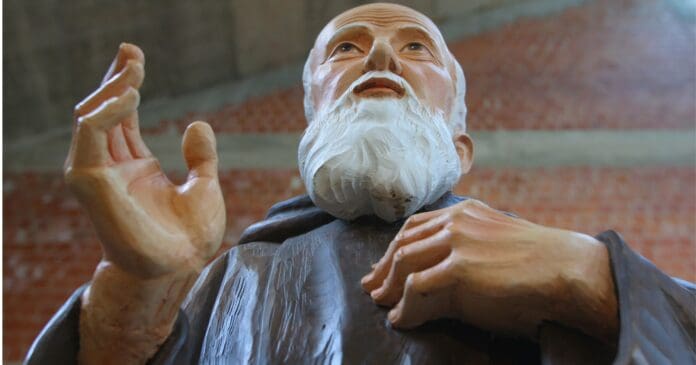
Saint Leopold Mandic was born on May 12, 1866 and died on June 30, 1942. He was an ethnic Croat born in Herceg Novi, in Boka Kotorska (modern-day Montenegro), and died in Padua, Italy. Physically malformed and delicate, having a height of only 1.35m (4’5”), with clumsy walk and stuttering, he developed tremendous spiritual strength. His feast is celebrated May 12.

Although he wanted to be a missionary in Eastern Europe, he spent almost all of his adult life in Italy, and lived in Padua from 1906 until the end of his life. He spent also one year in Italian prison during WWI, since he did not want to renounce his Croatian nationality. He also dreamed unceasingly about reuniting the Catholic and Orthodox churches and going to the Orient. He became known as Apostle of Confession and Apostle of Unity. He made a famous prayer that is the forerunner of today’s Ecumenism.

Bogdan Mandic was the twelfth child of Dragica Carevic and Petar Antun Mandic, owner of an Adriatic fishing fleet; they came from village of Zakucac (hinterland of city of Omiš, 28 km from Split). The origins of his family are noble; they came from Vrhbosna province in Bosnia.

He suffered from disabilities that would plague his speech and stature. The family eventually lost most of its wealth, and became more sympathetic to those who suffered in similar situations. In November of 1882 while he was 16, Bogdan went to Udine to enter the seminary of the Venetian Capuchins, and accepted the name “Leopold”. Two years later he was put in the Bassano del Grappa friary, where he took the name Leopold. His first profession of vows were made a year later in May and a profession of perpetual vows 4 years latter in 1888.

In the mid-1880s, Croatian Bishop Josip Juraj Strossmayer began a movement which focused on unity and consecration of the Cathedral of Akovo and Srijem, a movement in which Leopold took interest in. On September 20, 1890, Leopold was ordained to the presbyterate at Venice at the age of 24.

Refusing to renounce his Croatian nationality during World War I, Leopold was forced to go to southern Italy. All this time Leopold held a hope that he would be able to return to his homeland and preach among his people, a feat that would be inhibited by his disabilities. On top of his physical deformities, he also suffered from stomach ailments, poor eyesight, and arthritis. Unsurprisingly, the Capuchin ministers declined these attempts due to his health.

While in Italy, Leopold’s main vocation was confessions, which he did for 34 years. The Capuchin brothers often criticized Leopold for his approach to confession, calling him too lenient and compassionate. Leopold’s compassion showed that he was more understanding and sympathetic to the people that came to him, and would treat them with great sensitivity. He was an outspoken on issues with children, and being pro-life and especially fond of expectant mothers and young children. He did great work in setting up orphanages for children without parents.

Leopold also had a deep devotion to the Virgin Mary who he referred to as “my holy boss”. He was known to pray the rosary quite often, and celebrated the eucharist daily at the side altar in the Little Office of the Virgin Mary. He would then visit the sick in nursing homes, hospitals and homes all over Padua. He visited the Capuchin infirmary to comfort the sick friars, giving them words of advice and reminding them to have faith.

Leopold suffererd from esophagus cancer, which would ultimately lead to his death at age 76. On July 30, 1942, while preparing for the liturgy, he collapsed on the floor. He was then brought to his cell, where he was given the last rites. Friars that had gathered at his bed sang “Salve Regina,” and when they got to the words, “O clement, O loving, O sweet Virgin Mary,” St. Leopold died.

During the bombing of World War II the church and part of the friary where Leopold lived were demolished, but Leopold’s cell and confessional were left unharmed. Leopold had predicted this before his death, saying, “The church and the friary will be hit by the bombs, but not this little cell. Here God exercised so much mercy for people, it must remain as a monument to God’s goodness.” Paul VI beatified Leopold on May 2, 1976. He was canonized by John Paul II during the Synod of Bishops on October 16, 1983. Leopold is hailed as the “Apostle of Unity.”

Editorial credit: Zvonimir Atletic / Shutterstock.com
Love uCATHOLIC?
Get our inspiring content delivered to your inbox every morning - FREE!

Mass Readings for May 12, 2025

0

Acts 11:1-18
Psalms 42:2-3, 43:3-4
John 10:1-10

Acts 11:1-18
(1) Now the Apostles and brothers who were in Judea heard that the Gentiles had also received the Word of God (2) Then, when Peter had gone up to Jerusalem, those who were of the circumcision argued against him (3) saying, “Why did you enter to uncircumcised men, and why did you eat with them? (4) And Peter began to explain to them, in an orderly manner, saying (5) “I was in the city of Joppa praying, and I saw, in an ecstasy of mind, a vision: a certain container descending, like a great linen sheet being let down from heaven by its four corners. And it drew near to me (6) And looking into it, I considered and saw the four-footed beasts of the earth, and the wild beasts, and the reptiles, and the flying things of the air (7) Then I also heard a voice saying to me: ‘Rise up, Peter. Kill and eat. (8) But I said: ‘Never, lord! For what is common or unclean has never entered into my mouth. (9) Then the voice responded a second time from heaven, ‘What God has cleansed, you shall not call common. (10) Now this was done three times. And then everything was taken up again into heaven (11) And behold, immediately there were three men standing near the house where I was, having been sent to me from Caesarea (12) Then the Spirit told me that I should go with them, doubting nothing. And these six brothers went with me also. And we entered into the house of the man (13) And he described for us how he had seen an Angel in his house, standing and saying to him: ‘Send to Joppa and summon Simon, who is surnamed Peter (14) And he shall speak to you words, by which you shall be saved with your whole house. (15) And when I had begun to speak, the Holy Spirit fell upon them, just as upon us also, in the beginning (16) Then I remembered the words of the Lord, just as he himself said: ‘John, indeed, baptized with water, but you shall be baptized with the Holy Spirit. (17) Therefore, if God gave them the same grace, as also to us, who have believed in the Lord Jesus Christ, who was I, that I would be able to prohibit God? (18) Having heard these things, they were silent. And they glorified God, saying: “So has God also given to the Gentiles repentance unto life.

John 10:1-10
(1) “Amen, amen, I say to you, he who does not enter through the door into the fold of the sheep, but climbs up by another way, he is a thief and a robber (2) But he who enters through the door is the shepherd of the sheep (3) To him the doorkeeper opens, and the sheep hear his voice, and he calls his own sheep by name, and he leads them out (4) And when he has sent out his sheep, he goes before them, and the sheep follow him, because they know his voice (5) But they do not follow a stranger; instead they flee from him, because they do not know the voice of strangers. (6) Jesus spoke this proverb to them. But they did not understand what he was saying to them (7) Therefore, Jesus spoke to them again: “Amen, amen, I say to you, that I am the door of the sheep (8) All others, as many as have come, are thieves and robbers, and the sheep did not listen to them (9) I am the door. If anyone has entered through me, he will be saved. And he shall go in and go out, and he shall find pastures (10) The thief does not come, except so that he may steal and slaughter and destroy. I have come so that they may have life, and have it more abundantly

John 10:11-18
(11) I am the good Shepherd. The good Shepherd gives his life for his sheep (12) But the hired hand, and whoever is not a shepherd, to whom the sheep do not belong, he sees the wolf approaching, and he departs from the sheep and flees. And the wolf ravages and scatters the sheep (13) And the hired hand flees, because he is a hired hand and there is no concern for the sheep within him (14) I am the good Shepherd, and I know my own, and my own know me (15) just as the Father knows me, and I know the Father. And I lay down my life for my sheep (16) And I have other sheep that are not of this fold, and I must lead them. They shall hear my voice, and there shall be one sheepfold and one shepherd (17) For this reason, the Father loves me: because I lay down my life, so that I may take it up again (18) No one takes it away from me. Instead, I lay it down of my own accord. And I have the power to lay it down. And I have the power to take it up again. This is the commandment that I have received from my Father.

Love MASS READINGS?
Subscribe To Get The Daily Mass Readings Delivered Directly To Your Email.

Prayer Petitions for May 12, 2025

5

Please comment below to leave your prayer request. As your request will be prayed for, please also pray for the petitions of others! Remember in your prayers, those in purgatory, all those suffering around the world, and for the intentions of the Pope! Lord, hear our prayer!

Love uCATHOLIC?
Get our inspiring content delivered to your inbox every morning - FREE!

Saint Mamertus

7

Saint Mamertus the Bishop of Vienne, date of birth unknown; died shortly after 475. Concerning the life of Mamertus before his elevation to the See of Vienne, nothing certain is known. The fact that his brother, Claudianus Mamertus, the theological writer, received in his youth a sound training in rhetoric, and enjoyed the personal acquaintance of Bishop Eucherius of Lyons (434-50), suggests that the brothers belonged to a wealthy Gallic family from the neighbourhood of Lyons.

Like his brother, St. Mamertus was distinguished for his knowledge of profane subjects as well as of theology, and, before his elevation to the episcopate, appears to have been married. His election and consecration took place shortly before 462. As bishop he enlisted the services of his brother, who had withdrawn to a cloister, and ordained him priest of Vienne. The activity of the brothers is described in a letter of Sidonius Apollinaris, another of whose letters is addressed to Bishop Mamertus. In 463 Mamertus was engaged in a dispute with Pope Hilarius on the question of the privileges of the Bishop of Arles. Mamertus evidently submitted, since we find no subsequent reference to the incident.

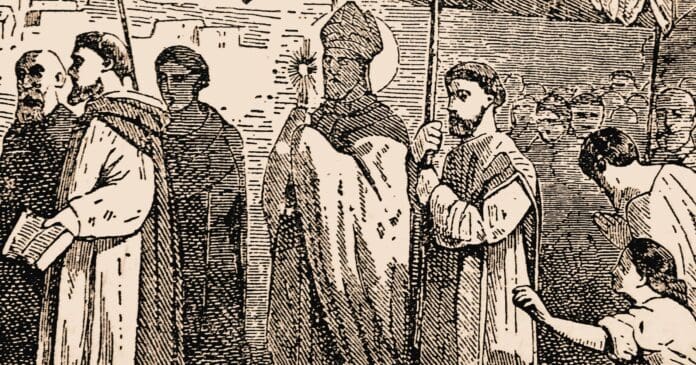
St. Mamertus is best remembered as he originator of the penitential practice of Rogation days. This practice is marked by processions and Psalms for the three days preceding the feast of the Ascension.

Photo credit: Public Domain via Wikimedia Commons
Love uCATHOLIC?
Get our inspiring content delivered to your inbox every morning - FREE!

Mass Readings for May 11, 2025

0

Acts 13:14, 43-52
Psalms 100:1-2, 3, 5
John 10:27-30

Acts 13:14, 43-52
(14) Yet truly, they, traveling on from Perga, arrived at Antioch in Pisidia. And upon entering the synagogue on the Sabbath day, they sat down (43) And when the synagogue had been dismissed, many among the Jews and the new worshipers were following Paul and Barnabas. And they, speaking to them, persuaded them to continue in the grace of God (44) Yet truly, on the following Sabbath, nearly the entire city came together to hear the Word of God (45) Then the Jews, seeing the crowds, were filled with envy, and they, blaspheming, contradicted the things that were being said by Paul (46) Then Paul and Barnabas said firmly: “It was necessary to speak the Word of God first to you. But because you reject it, and so judge yourselves unworthy of eternal life, behold, we turn to the Gentiles (47) For so has the Lord instructed us: ‘I have set you as a light to the Gentiles, so that you may bring salvation to the ends of the earth.’ (48) Then the Gentiles, upon hearing this, were gladdened, and they were glorifying the Word of the Lord. And as many as believed were preordained to eternal life (49) Now the word of the Lord was disseminated throughout the entire region (50) But the Jews incited some devout and honest women, and the leaders of the city. And they stirred up a persecution against Paul and Barnabas. And they drove them away from their parts (51) But they, shaking the dust from their feet against them, went on to Iconium (52) The disciples were likewise filled with gladness and with the Holy Spirit

Psalms 100:1-2, 3, 5
(1) A Psalm of David himself. I will sing mercy and judgment to you, O Lord. I will sing psalms (2) And I will have understanding within the immaculate way, when you will draw near to me. I wandered about in the innocence of my heart, in the midst of my house (3) I will not display any unjust thing before my eyes. I have hated those carrying out betrayals (5) The one who secretly detracted his neighbor, this one I pursued. The one with an arrogant eye and an insatiable heart, with that one I would not eat

Revelation 7:9, 14-17
(9) After these things, I saw a great crowd, which no one could number, from all the nations and tribes and peoples and languages, standing before the throne and in sight of the Lamb, clothed in white robes, with palm branches in their hands (14) And I said to him, “My lord, you know.” And he said to me: “These are the ones who have come out of the great tribulation, and they have washed their robes and have made them white by the blood of the Lamb (15) Therefore, they are before the throne of God, and they serve him, day and night, in his temple. And the One who sits upon the throne shall dwell over them (16) They shall not hunger, nor shall they thirst, anymore. Neither shall the sun beat down upon them, nor any heat (17) For the Lamb, who is in the midst of the throne, will rule over them, and he will lead them to the fountains of the waters of life. And God will wipe away every tear from their eyes.

John 10:27-30
(27) My sheep hear my voice. And I know them, and they follow me (28) And I give them eternal life, and they shall not perish, for eternity. And no one shall seize them from my hand (29) What my Father gave to me is greater than all, and no one is able to seize from the hand of my Father (30) I and the Father are one.

Love MASS READINGS?
Subscribe To Get The Daily Mass Readings Delivered Directly To Your Email.

Prayer Petitions for May 11, 2025

4

Please comment below to leave your prayer request. As your request will be prayed for, please also pray for the petitions of others! Remember in your prayers, those in purgatory, all those suffering around the world, and for the intentions of the Pope! Lord, hear our prayer!

Love uCATHOLIC?
Get our inspiring content delivered to your inbox every morning - FREE!

Saint Damien of Molokai

13

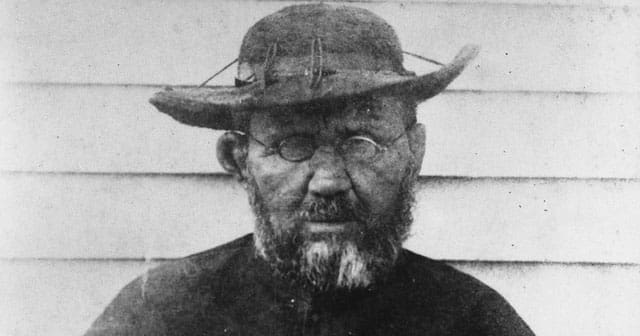
Saint Damien of Molokai, or Father Damien as he is commonly known, was born Joseph de Veuster in Tremeloo, Belgium, on January 3, 1840. His father, a small farmer, sent him to a college at Braine-le-Comte, to prepare for a commercial profession; but as a result of a mission given by the Redemptorists in 1858, Joseph decided to become a religious. He entered the novitiate of the Fathers of the Sacred Heart of Jesus and Mary at Louvain, and took in religion the name of Damien. He was admitted to the religious profession, 7 Oct. 1860.

Three years later, though still in minor orders, he was sent to the mission of the Hawaiian Islands, where he arrived, 19 March, 1864. Ordained priest at Honolulu 24 May of the same year, he was later given charge of various districts on the island of Hawaii, and, animated with a burning zeal, his robust constitution allowed him to give full play to the impulses of his heart. He was not only the missionary of the natives, but also constructed several chapels with his own hands, both in Hawaii and in Molokai.

On the latter island there had grown up a leper settlement where the Government kept segregated all persons afflicted with the loathsome disease. The board of health supplied the unfortunates with food and clothing, but was unable in the beginning to provide them with either resident physicians or nurses.

On 10 May, 1873, Father Damien, at his own request and with the sanction of his bishop, arrived at the settlement as its resident priest. There were then 600 lepers. “As long as the lepers can care for themselves”, wrote the superintendent of the board of health to Bishop Maigret, “they are comparatively comfortable, but as soon as the dreadful disease renders them helpless, it would seem that even demons themselves would pity their condition and hasten their death.” For a long time, however, Father Damien was the only one to bring them the succour they so greatly needed. He not only administered the consolations of religion, but also rendered them such little medical service and bodily comforts as were within his power.

He dressed their ulcers, helped them erect their cottages, and went so far as to dig their graves and make their coffins. After twelve years of this heroic service he discovered in himself the first symptoms of the disease. This was in 1885. He nevertheless continued his charitable ministrations, being assisted at this period by two other priests and two lay brothers. Father Damien died peacefully on April 15, 1889, on Molokai after sixteen years of undaunted dedication. On October 11, 2009, Father Damien was canonized by Pope Benedict XVI in a ceremony at the Vatican, thus becoming Saint Damien.

Photo credit: Public Domain via Wikimedia Commons
Love uCATHOLIC?
Get our inspiring content delivered to your inbox every morning - FREE!

Mass Readings for May 10, 2025

0

Acts 9:31-42
Psalms 116:12-17
John 6:60-69

Acts 9:31-42
(31) Certainly, the Church had peace throughout all of Judea and Galilee and Samaria, and it was being built up, while walking in the fear of the Lord, and it was being filled with the consolation of the Holy Spirit (32) Then it happened that Peter, as he traveled around everywhere, came to the saints who were living at Lydda (33) But he found there a certain man, named Aeneas, who was a paralytic, who had lain in bed for eight years (34) And Peter said to him: “Aeneas, the Lord Jesus Christ heals you. Rise up and arrange your bed.” And immediately he rose up (35) And all who were living in Lydda and Sharon saw him, and they were converted to the Lord (36) Now in Joppa there was a certain disciple named Tabitha, which in translation is called Dorcas. She was filled with the good works and almsgiving that she was accomplishing (37) And it happened that, in those days, she became ill and died. And when they had washed her, they laid her in an upper room (38) Now since Lydda was close to Joppa, the disciples, upon hearing that Peter was there, sent two men to him, asking him: “Do not be slow in coming to us. (39) Then Peter, rising up, went with them. And when he had arrived, they led him to an upper room. And all the widows were standing around him, weeping and showing him the tunics and garments that Dorcas had made for them (40) And when they had all been sent outside, Peter, kneeling down, prayed. And turning to the body, he said: “Tabitha, arise.” And she opened her eyes and, upon seeing Peter, sat up again (41) And offering her his hand, he lifted her up. And when he had called in the saints and the widows, he presented her alive (42) Now this became known throughout all of Joppa. And many believed in the Lord

John 6:60-69
(60) He said these things when he was teaching in the synagogue at Capernaum (61) Therefore, many of his disciples, upon hearing this, said: “This saying is difficult,” and, “Who is able to listen to it? (62) But Jesus, knowing within himself that his disciples were murmuring about this, said to them: “Does this offend you (63) Then what if you were to see the Son of man ascending to where he was before (64) It is the Spirit who gives life. The flesh does not offer anything of benefit. The words that I have spoken to you are spirit and life (65) But there are some among you who do not believe.” For Jesus knew from the beginning who were unbelieving and which one would betray him (66) And so he said, “For this reason, I said to you that no one is able to come to me, unless it has been given to him by my Father. (67) After this, many of his disciples went back, and they no longer walked with him (68) Therefore, Jesus said to the twelve, “Do you also want to go away? (69) Then Simon Peter answered him: “Lord, to whom would we go? You have the words of eternal life

Love MASS READINGS?
Subscribe To Get The Daily Mass Readings Delivered Directly To Your Email.

Prayer Petitions for May 10, 2025

2

Please comment below to leave your prayer request. As your request will be prayed for, please also pray for the petitions of others! Remember in your prayers, those in purgatory, all those suffering around the world, and for the intentions of the Pope! Lord, hear our prayer!

Love uCATHOLIC?
Get our inspiring content delivered to your inbox every morning - FREE!

Saint Pachomius

11

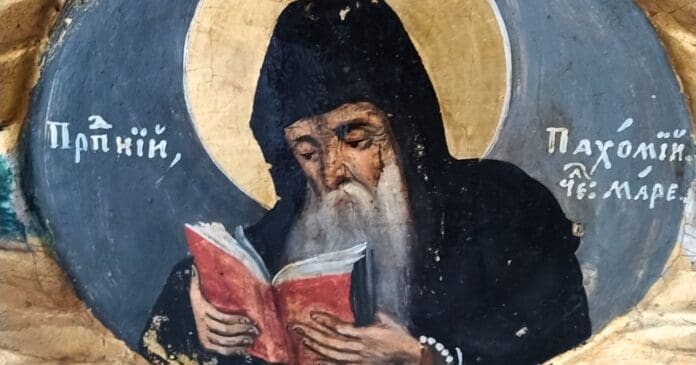
Saint Pachomius was born about 292 in the Upeer Thebaid in Egypt and was inducted into the Emperor’s army as a twenty-year-old. The great kindness of Christians at Thebes toward the soldiers became embedded in his mind and led to his conversion after his discharge. After being baptized, he became a disciple of an anchorite, Palemon, and took the habit. The two of them led a life of extreme austerity and total dedication to God; they combined manual labor with unceasing prayer both day and night.

Later, Pachomius felt called to build a monastery on the banks of the Nile at Tabennisi; so about 318 Palemon helped him build a cell there and even remained with him for a while. In a short time some one hundred monks joined him and Pachomius organized them on principles of community living. So prevalent did the desire to emulate the life of Pachomius and his monks become, that the holy man was obliged to establish ten other monasteries for men and two nunneries for women. Before his death in 346, there were seven thousand monks in his houses, and his Order lasted in the East until the 11th century.

St. Pachomius was the first monk to organize hermits into groups and write down a Rule for them. Both St. Basil and St. Benedict drew from his Rule in setting forth their own more famous ones. Hence, though St. Anthony is usually regarded as the founder of Christian monasticism, it was really St. Pachomius who began monasticism as we know it today.

Photo credit: Mihai Andrei / Shutterstock.com
Love uCATHOLIC?
Get our inspiring content delivered to your inbox every morning - FREE!