Solemnity of the Epiphany of Our Lord

9

Epiphany, an ancient Christian feast, is traditionally celebrated on January 6 in both Eastern Orthodox and Eastern Catholic Churches, where it is known as Theophany, signifying God’s revelation to mankind. However, in the United States, it is observed on the Sunday between January 1 and January 6; in 2018, it fell on January 6.

Originally, Epiphany commemorated four major events, each symbolizing a different aspect of God’s revelation to humans. These are, in order of their initial significance: the Baptism of Jesus, where God the Father’s voice and the Holy Spirit’s descent affirm Jesus as God’s Son; Christ’s miracle at the Cana wedding, showcasing His divinity; the Nativity of Christ, where angels and shepherds acknowledge Jesus; and the visit of the Magi, representing the Gentile nations recognizing Christ’s divinity.

The feast evolved over time. In the West, the Nativity’s celebration eventually became Christmas, distinct from Epiphany, which continued to honor the Baptism, first miracle, and Magi’s visit. Thus, Epiphany concludes the twelve-day Christmastide, starting with Christ’s birth revelation to Israel and ending with His revelation to the Gentiles.

With further developments, Western traditions now separate the celebrations: the Baptism of the Lord occurs on the Sunday following January 6, and the Cana wedding is remembered on the subsequent Sunday.

In Europe, Epiphany’s significance rivals, and sometimes surpasses, Christmas. In Mediterranean countries like Italy, gift-exchanging occurs on Epiphany, echoing the Magi’s offerings to Jesus. Conversely, in Northern Europe, it’s common to exchange gifts on both Christmas and Epiphany, sometimes including smaller gifts during the intervening twelve days.

Editorial credit: jorisvo / Shutterstock.com
Love uCATHOLIC?
Get our inspiring content delivered to your inbox every morning - FREE!

Saint Elizabeth Ann Seton

7

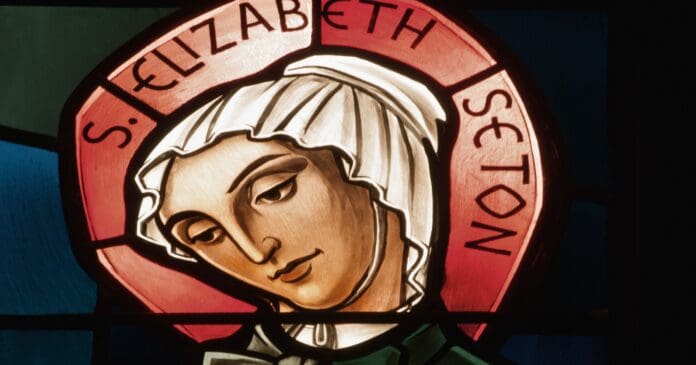
Elizabeth Ann Seton, the first American-born canonized saint in the Catholic Church, experienced a life marked by deep faith and profound challenges. Born into New York’s elite during the pre-Revolution era, she was an avid reader, immersing herself in everything from the Bible to contemporary literature.

Elizabeth’s early life, despite her societal standing, was characterized by simplicity and solitude. The Bible, her constant source of guidance and solace, remained a lifelong passion. In 1794, she married the affluent William Seton, entering a period of initial happiness and prosperity. Her early married life, as she reflected in her diary, felt like a blend of earthly and heavenly bliss.

However, this happiness was short-lived. William’s father’s death left the couple responsible for his half-siblings and the family business. Rapid and severe challenges followed: William’s failing business and health led to bankruptcy and a desperate journey to Italy for recovery. Tragically, William succumbed to tuberculosis in Italy, a loss mitigated only by his renewed faith in God.

These painful separations deepened Elizabeth’s reliance on God and acceptance of His will, a central theme in her spiritual journey. Her growing concern for her family’s spiritual well-being eventually led her to the Catholic Church, influenced by her Italian acquaintances’ kindness and her fervent desire for the Eucharist.

Having lost her mother early, Elizabeth found solace in the Blessed Virgin Mary, seeing her as a spiritual mother and guide to the True Faith. She embraced Catholicism in 1805.

Elizabeth’s educational endeavors began in Baltimore, Maryland, where she founded a school and later formed a Sisterhood, establishing America’s first free Catholic school. Her vows in 1809 marked the start of her religious leadership as Mother Seton.

Despite battling tuberculosis herself, Mother Seton’s influence grew. Her Sisterhood, following a rule inspired by St. Vincent de Paul, expanded to include schools and orphanages. Her legacy continues through various sister groups originating from her foundation.

In her final years, Elizabeth embraced her impending death with joy, believing in her divine calling. She passed away in 1821, just sixteen years after converting to Catholicism, and was canonized in 1975, leaving an indelible mark on American Catholic religious history.

Editorial credit: Nancy Bauer / Shutterstock.com
Love uCATHOLIC?
Get our inspiring content delivered to your inbox every morning - FREE!

Mass Readings for January 4, 2026

0

Isaiah 60:1-6
Psalms 71:1-2,7-8,10-13
Ephesians 3:2-3,5-6
Matthew 2:2
Matthew 2:1,3-12

Isaiah 60:1-6
(1) Rise up to be illuminated, O Jerusalem! For your light has arrived, and the glory of the Lord has risen over you (2) For behold, darkness will cover the earth, and thick darkness will cover the peoples. Then the Lord will rise above you, and his glory will be seen in you (3) And the nations will walk in your light, and the kings will walk by the splendor of your rising (4) Lift up your eyes all around and see! All these have been gathered together; they have arrived before you. Your sons will arrive from far away, and your daughters will rise up from your side (5) Then you will see, and you will overflow, and your heart will be amazed and expanded. When the multitude of the sea will have been converted to you, the strength of the nations will approach you (6) A multitude of camels will inundate you: the dromedaries from Midian and Ephah. All those from Sheba will arrive, carrying gold and frankincense, and announcing praise to the Lord

Psalms 71:1-2,7-8,10-13
(1) A Psalm according to Solomon (2) Give your judgment, O God, to the king, and your justice to the king’s son, to judge your people with justice and your poor with judgment (7) In his days, justice will rise like the sun, with abundance of peace, until the moon is taken away (8) And he will rule from sea to sea and from the river to the limits of the whole world (10) The kings of Tarshish and the islands will offer gifts. The kings of Arabia and of Seba will bring gifts (11) And all the kings of the earth shall adore him. All nations will serve him (12) For he will free the poor from the powerful, and the poor one who has no helper (13) He will spare the poor and the indigent, and he will bring salvation to the souls of the poor

Ephesians 3:2-3,5-6
(2) Now certainly, you have heard of the dispensation of the grace of God, which has been given to me among you (3) that, by means of revelation, the mystery was made known to me, just as I have written above in a few words (5) In other generations, this was unknown to the sons of men, even as it has now been revealed to his holy Apostles and Prophets in the Spirit (6) so that the Gentiles would be co-heirs, and of the same body, and partners together, by his promise in Christ Jesus, through the Gospel

Matthew 2:2
(2) saying: “Where is he who was born king of the Jews? For we have seen his star in the east, and we have come to adore him.

Matthew 2:1,3-12
(1) And so, when Jesus had been born in Bethlehem of Judah, in the days of king Herod, behold, Magi from the east arrived in Jerusalem (3) Now king Herod, hearing this, was disturbed, and all Jerusalem with him (4) And gathering together all the leaders of the priests, and the scribes of the people, he consulted with them as to where the Christ would be born (5) And they said to him: “In Bethlehem of Judea. For so it has been written by the prophet (6) ‘And you, Bethlehem, the land of Judah, are by no means least among the leaders of Judah. For from you shall go forth the ruler who shall guide my people Israel.’ (7) Then Herod, quietly calling the Magi, diligently learned from them the time when the star appeared to them (8) And sending them into Bethlehem, he said: “Go and diligently ask questions about the boy. And when you have found him, report back to me, so that I, too, may come and adore him. (9) And when they had heard the king, they went away. And behold, the star that they had seen in the east went before them, even until, arriving, it stood still above the place where the child was (10) Then, seeing the star, they were gladdened by a very great joy (11) And entering the home, they found the boy with his mother Mary. And so, falling prostrate, they adored him. And opening their treasures, they offered him gifts: gold, frankincense, and myrrh (12) And having received a response in sleep that they should not return to Herod, they went back by another way to their own region

Love MASS READINGS?
Subscribe To Get The Daily Mass Readings Delivered Directly To Your Email.

Prayer Petitions for January 4, 2026

3

Please comment below to leave your prayer request. As your request will be prayed for, please also pray for the petitions of others! Remember in your prayers, those in purgatory, all those suffering around the world, and for the intentions of the Pope! Lord, hear our prayer!

Love uCATHOLIC?
Get our inspiring content delivered to your inbox every morning - FREE!

Feast of the Most Holy Name of Jesus

7

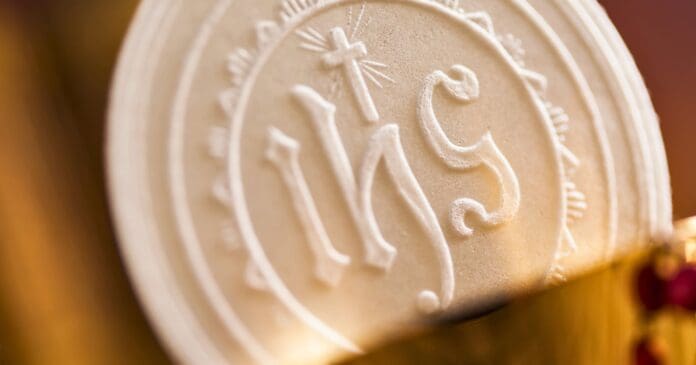
This feast focuses on the name of Jesus, derived from the Hebrew name Joshua or Yehoshuah, translating to “Yahweh is salvation” or “Yahweh will save.”

The Feast of the Holy Name, also known historically as the Feast of the Circumcision, was influenced by the writings of St. Paul. In the book of Philippians, Paul emphasizes the exalted status of Jesus’ name, a sentiment that resonated through the ages. The devotion to the Holy Name gained momentum in the 12th century, largely thanks to the efforts of Cistercian monks and nuns. However, it was St. Bernardine of Siena, a 15th-century Franciscan, who popularized it as a means to resolve class conflicts and family feuds in Italian city-states.

The devotion spread further through the preaching of Franciscan and Dominican orders and was widely promoted by the Jesuits in the 16th century. Official recognition came in 1530 when Pope Clement V approved a specific Office of the Holy Name for the Franciscans, and in 1721, Pope Innocent XIII extended its observance to the entire Church.

The Feast of the Holy Name serves as a reminder for Catholics to continuously honor and venerate the name of Jesus. This celebration is a call to embrace the love of Jesus Christ, the Savior of the world, and to let this love grow in every heart.

Photo credit: Sebastian Duda / Shutterstock.com
Love uCATHOLIC?
Get our inspiring content delivered to your inbox every morning - FREE!

Mass Readings for January 3, 2026

0

1 John 2:29–3:6
Psalms 97:1,3-6
John 1:12,14
John 1:29-34

1 John 2:29–3:6
(29) If you know that he is just, then know, too, that all who do what is just are born of him (1) See what kind of love the Father has given to us, that we would be called, and would become, the sons of God. Because of this, the world does not know us, for it did not know him (2) Most beloved, we are now the sons of God. But what we shall be then has not yet appeared. We know that when he does appear, we shall be like him, for we shall see him as he is (3) And everyone who holds this hope in him, keeps himself holy, just as he also is holy (4) Everyone who commits a sin, also commits iniquity. For sin is iniquity (5) And you know that he appeared in order that he might take away our sins. For in him there is no sin (6) Everyone who abides in him does not sin. For whoever sins has not seen him, and has not known him

Psalms 97:1,3-6
(1) A Psalm of David himself. Sing to the Lord a new song, for he has performed wonders. His right hand has accomplished salvation for him, with his holy arm (3) He has remembered his mercy and his truth toward the house of Israel. All the ends of the earth have seen the salvation of our God (4) Sing joyfully to God, all the earth. Sing and exult, and sing psalms (5) Sing psalms to the Lord with stringed instruments, with strings and the voice of a psalmist (6) with subtle wind instruments and the voice of woodwinds. Make a joyful noise before the Lord our king

John 1:12,14
(14) And the Word became flesh, and he lived among us, and we saw his glory, glory like that of an only-begotten son from the Father, full of grace and truth (12) Yet whoever did accept him, those who believed in his name, he gave them the power to become the sons of God

John 1:29-34
(29) On the next day, John saw Jesus coming toward him, and so he said: “Behold, the Lamb of God. Behold, he who takes away the sin of the world (30) This is the one about whom I said, ‘After me arrives a man, who has been placed ahead of me, because he existed before me. (31) And I did not know him. Yet it is for this reason that I come baptizing with water: so that he may be made manifest in Israel. (32) And John offered testimony, saying: “For I saw the Spirit descending from heaven like a dove; and he remained upon him (33) And I did not know him. But he who sent me to baptize with water said to me: ‘He over whom you will see the Spirit descending and remaining upon him, this is the one who baptizes with the Holy Spirit. (34) And I saw, and I gave testimony: that this one is the Son of God.

Love MASS READINGS?
Subscribe To Get The Daily Mass Readings Delivered Directly To Your Email.

Prayer Petitions for January 3, 2026

4

Please comment below to leave your prayer request. As your request will be prayed for, please also pray for the petitions of others! Remember in your prayers, those in purgatory, all those suffering around the world, and for the intentions of the Pope! Lord, hear our prayer!

Love uCATHOLIC?
Get our inspiring content delivered to your inbox every morning - FREE!

Saint Basil the Great

8

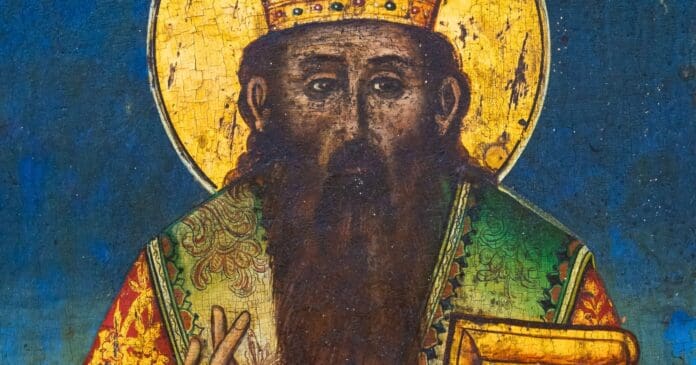
Saint Basil the Great, born in 330 in Caesarea of Cappadocia, was one of ten children to his parents, St. Basil the Elder and St. Emmelia, with several of his siblings also recognized as saints. He pursued his education in Caesarea, Constantinople, and Athens, where he met his lifelong friend St. Gregory Nazianzen in 352.

Following his studies, Basil established a school of oratory in Caesarea and practiced law for some time. However, he soon shifted his focus to a monastic life, founding a monastery in Pontus, which he managed for five years. His contribution to monasticism includes the creation of a monastic rule that remains influential in Eastern Christianity.

Basil’s path led him to further religious commitments. In 370, he was ordained and became the bishop of Caesarea. His tenure as bishop was marked by significant activity and contributions in various fields, including theology, charity, and church administration. Known for his vast knowledge, eloquence, and immense charity, he was titled “Great” during his lifetime and posthumously named a Doctor of the Church.

A key figure in early Christianity, Basil played a crucial role in affirming Nicene orthodoxy against Arianism in the Byzantine East. His efforts significantly influenced the condemnation of Arianism at the Council of Constantinople in 381-82.

Moreover, Basil actively combated simony and worked tirelessly to aid those affected by drought and famine. He advocated for higher clergy standards and maintained strict clerical discipline. Known for his fearlessness in denouncing evil, he excommunicated those involved in the prostitution trade in Cappadocia. His legacy encompasses his accomplishments in statesmanship, personal holiness, and as one of Christianity’s great orators.

Editorial credit: alexfa92 / Shutterstock.com
Love uCATHOLIC?
Get our inspiring content delivered to your inbox every morning - FREE!

Saint Gregory Nazianzen

4

Saint Gregory Nazianzen, recognized as a Doctor of the Church and often called “the Theologian,” lived a life marked by gentleness, scholarship, and a series of personal and professional challenges. Despite facing numerous controversies, disputes, and misunderstandings, not only with his adversaries but also with those closer to him, his contributions have been increasingly appreciated over time.

Gregory was born into a family of saints in Arianzus, Cappadocia. His father, a bishop, belonged to an era when married clergy were common. Gregory’s education spanned several regions – Cappadocia, Palestine, Alexandria, and Athens. It was in Athens where he forged a deep friendship with St. Basil. At thirty, he left Athens to join Basil in a life dedicated to retreat, prayer, and study, laying a foundation for future monastic practices in both the East and the West.

Returning home to assist his aging father, Gregory was reluctantly ordained, a practice not unusual for that time. Struggling with a sense of unworthiness, he initially fled to Basil but soon returned and wrote a treatise on priesthood, which has inspired many, including St. Gregory the Great.

Gregory’s tenure at Nazianzus was tumultuous, and his inability to engage in confrontational defense of church matters strained his relationship with St. Basil. After a peaceful five-year retirement, he was called to Constantinople, a city then dominated by Arianism and religious strife, often expressed through street fighting and political intrigue.

Despite his unassuming demeanor and initial unpopularity, Gregory’s eloquent sermons on the Trinity gradually earned him respect and fame, attracting listeners like St. Jerome. His appointment as bishop of Constantinople was met with strong opposition, prompting him to resign and retreat into a life of study, writing, and mortification, where he found contentment in his final years.

Photo credit: Public Domain via Wikimedia Commons
Love uCATHOLIC?
Get our inspiring content delivered to your inbox every morning - FREE!

Mass Readings for January 2, 2026

0

1-John 2:22-28
Psalms 97:1-4
Hebrews 1:1-2
John 1:19-28

1-John 2:22-28
(22) Who is a liar, other than he who denies that Jesus is the Christ? This one is the Antichrist, who denies the Father and the Son (23) No one who denies the Son also has the Father. Whoever confesses the Son, also has the Father (24) As for you, let what you have heard from the beginning remain in you. If what you have heard from the beginning remains in you, then you, too, shall abide in the Son and in the Father (25) And this is the Promise, which he himself has promised to us: Eternal Life (26) I have written these things to you, because of those who would seduce you (27) But as for you, let the Anointing that you have received from him abide in you. And so, you have no need of anyone to teach you. For his Anointing teaches you about everything, and it is the truth, and it is not a lie. And just as his Anointing has taught you, abide in him (28) And now, little sons, abide in him, so that when he appears, we may have faith, and we may not be confounded by him at his advent

Psalms 97:1-4
(1) A Psalm of David himself. Sing to the Lord a new song, for he has performed wonders. His right hand has accomplished salvation for him, with his holy arm (2) The Lord has made known his salvation. He has revealed his justice in the sight of the nations (3) He has remembered his mercy and his truth toward the house of Israel. All the ends of the earth have seen the salvation of our God (4) Sing joyfully to God, all the earth. Sing and exult, and sing psalms

Hebrews 1:1-2
(1) In many places and in many ways, in past times, God spoke to the fathers through the Prophets (2) lastly, in these days, he has spoken to us through the Son, whom he appointed as the heir of all things, and through whom he made the world

John 1:19-28
(19) And this is the testimony of John, when the Jews sent priests and Levites from Jerusalem to him, so that they might ask him, “Who are you? (20) And he confessed it and did not deny it; and what he confessed was: “I am not the Christ. (21) And they questioned him: “Then what are you? Are you Elijah?” And he said, “I am not.” “Are you the Prophet?” And he answered, “No. (22) Therefore, they said to him: “Who are you, so that we may give an answer to those who sent us? What do you say about yourself? (23) He said, “I am a voice crying out in the desert, ‘Make straight the way of the Lord,’ just as the prophet Isaiah said. (24) And some of those who had been sent were from among the Pharisees (25) And they questioned him and said to him, “Then why do you baptize, if you are not the Christ, and not Elijah, and not the Prophet? (26) John answered them by saying: “I baptize with water. But in your midst stands one, whom you do not know (27) The same is he who is to come after me, who has been placed ahead of me, the laces of whose shoes I am not worthy to loosen. (28) These things happened in Bethania, across the Jordan, where John was baptizing

Love MASS READINGS?
Subscribe To Get The Daily Mass Readings Delivered Directly To Your Email.