Solemnity of The Sacred Heart of Jesus

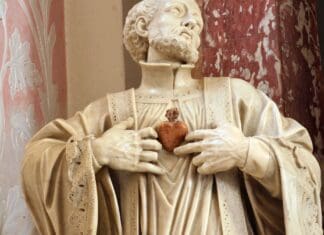
Devotion to the Sacred Heart of Jesus goes back at least to the 11th century, but through the 16th century, it remained a private devotion, often tied to devotion to the Five Wounds of Christ. The first feast of the Sacred Heart was celebrated on August 31, 1670, in Rennes, France, through the efforts of Fr. Jean Eudes (1602-1680). From Rennes, the devotion spread, but it took the visions of St. Margaret Mary Alacoque (1647-1690) for the devotion to become universal.

Saint Josemaria Escriva

Saint Josemaria Escriva was the founder the Priestly Society of the Holy Cross, united to Opus Dei.

Saint William of Vercelli

Saint William of Vercelli, orphaned young, made a pilgrimage at 15, living in austere contemplation on a mountain near Zaragoza.

Solemnity Of The Nativity of John The Baptist

The birth of St. John the Baptist was foretold by an angel of the Lord to his father, Zachary, who was offering incense in the Temple. It was the office of St. John to prepare the way for Christ, and before he was born into the world he began to live for the Incarnate God. Even in the womb he knew the presence of Jesus and of Mary, and he leaped with joy at the glad coming of the son of man. In his youth he remained hidden, because He for Whom he waited was hidden also.

Saint Ethelreda

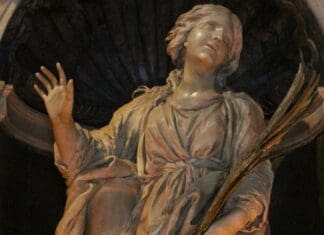
Ethelreda, known as Saint Audrey, was an English princess who founded Ely Abbey and is the namesake for the word "tawdry."

The Solemnity of Corpus Christi

The Feast of Corpus Christi celebrates the institution of Holy Communion, originating in the 13th century, distinct from Holy Thursday's solemn Holy Week focus.

Saint Aloysius Gonzaga

Saint Aloysius Gonzaga (1568-1591) renounced his right to the title of Marquis and to the vast wealth he was destined to inherit, he joined the Jesuits. During his training in Rome, he would care for victims of the plague in the streets. He himself contracted the disease as a result of his efforts for the suffering and died on June 21, 1591, at the age of twenty-three, six years short of his ordination as a Jesuit priest.

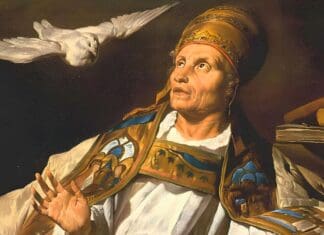
Saint Paulinus of Nola

Saint Paulinus of Nola (353-431) was a Roman Senator who converted to a severe monasticism in 394. He eventually became Bishop of Nola, and helped to resolve the disputed election of Pope Boniface I, and was canonized as a saint.

Saint Romuald

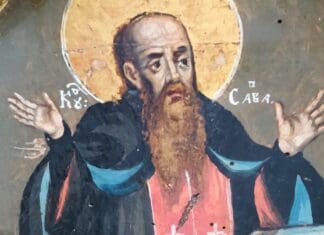
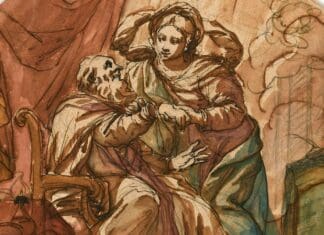
Saint Romuald, whose aim was to restore the primitive rule to the Order of Saint Benedict, succeeded in founding some hundred monasteries in both Italy and France, and he filled the solitudes with hermitages. The principal monastery was that at Camaldoli, a wild, deserted region, where he built a church, surrounded by a number of separate cells for the solitaries who lived under his rule; his disciples were thus called Camaldolese. For five years the fervent founder was tormented by furious attacks by the demon. He repulsed him, saying, “O enemy! Driven out of heaven, you come to the desert? Depart, ugly serpent, already you have what is due you.” And the shamed adversary would leave him. Saint Romuald’s father, Sergius, was moved by the examples of his son, and entered religion near Ravenna; there he, too, was attacked by hell and thought of abandoning his design. Romuald went to visit him; he showed him the error of the devil’s ruses, and his father died in the monastery, in the odor of sanctity.

Venerable Matt Talbot

Venerable Matt Talbot, born in Dublin, patron of those struggling with alcoholism, was an active alcoholic for nearly 15 years.