Mass Readings for December 2, 2019

1

Isaiah 4:2-6
Psalms 122:1-9
Matthew 8:5-11

Isaiah 4:2-6
2 In that day the branch of the LORD shall be beautiful and glorious, and the fruit of the land shall be the pride and glory of the survivors of Israel. 3 And he who is left in Zion and remains in Jerusalem will be called holy, every one who has been recorded for life in Jerusalem, 4 when the Lord shall have washed away the filth of the daughters of Zion and cleansed the bloodstains of Jerusalem from its midst by a spirit of judgment and by a spirit of burning. 5 Then the LORD will create over the whole site of Mount Zion and over her assemblies a cloud by day, and smoke and the shining of a flaming fire by night; for over all the glory there will be a canopy and a pavilion. 6 It will be for a shade by day from the heat, and for a refuge and a shelter from the storm and rain.

Psalms 122:1-9
1 I was glad when they said to me, “Let us go to the house of the LORD!” 2 Our feet have been standing within your gates, O Jerusalem! 3 Jerusalem, built as a city which is bound firmly together, 4 to which the tribes go up, the tribes of the LORD, as was decreed forIsrael, to give thanks to the name of the LORD. 5 There thrones for judgment were set, the thrones of the house of David. 6 Pray for the peace of Jerusalem! “May they prosper who love you! 7 Peace be within your walls, and security within your towers!” 8 For my brethren and companions’ sake I will say, “Peace be within you!” 9 For the sake of the house of the LORD our God, I will seek your good.

Matthew 8:5-11
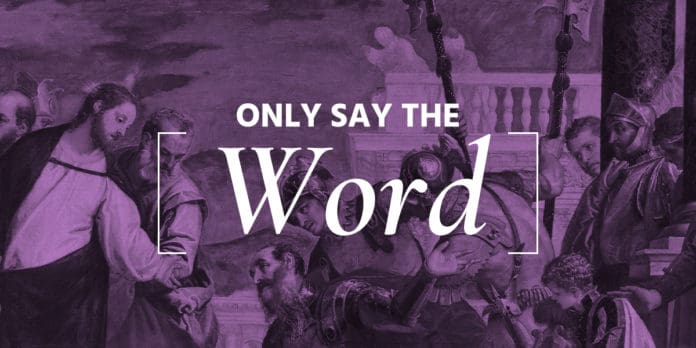
5 As he entered Caper’na-um, a centurion came forward to him, beseeching him 6 and saying, “Lord, my servant is lying paralyzed at home, in terrible distress.” 7 And he said to him, “I will come and heal him.” 8 But the centurion answered him, “Lord, I am not worthy to have you come under my roof; but only say the word, and my servant will be healed. 9 For I am a man under authority, with soldiers under me; and I say to one, `Go,’ and he goes, and to another, `Come,’ and he comes, and to my slave, `Do this,’ and he does it.” 10 When Jesus heard him, he marveled, and said to those who followed him, “Truly, I say to you, not even in Israel have I found such faith. 11 I tell you, many will come from east and west and sit at table with Abraham, Isaac, and Jacob in the kingdom of heaven,

Love MASS READINGS?
Subscribe To Get The Daily Mass Readings Delivered Directly To Your Email.

Prayer Petitions for December 2, 2019

8

Please comment below to leave your prayer request. As your request will be prayed for, please also pray for the petitions of others! Remember in your prayers, those in purgatory, all those suffering around the world, and for the intentions of the Pope! Lord, hear our prayer!

Love uCATHOLIC?
Get our inspiring content delivered to your inbox every morning - FREE!

How To Let Jesus Heal The Most Broken Parts Of Your Soul

1

In today’s Gospel reading, we see two intertwined virtues exemplified in the centurion: great humility and great faith. At this point in Jesus’ public ministry, people have caught wind of His miracles, His works, and His teachings and it was not abnormal for Jesus to be followed by crowds or stopped by strangers on the street. While this encounter with the centurion appears similar to others described in the Gospels, there is something striking about this exchange–Jesus was amazed. 

When the centurion approaches to ask for healing, Jesus responds immediately to his request, saying that He will come to his home and heal him. The centurion’s response, “Lord, I am not worthy that you should enter under my roof, but only say the word and my servant shall be healed” expresses great humility and faith. The centurion recognizes that Jesus is not just a Jewish rabbi, but that He is the Son of God. This revelation of Jesus’ identity prompts him to respond with humility, to acknowledge his nothingness before Jesus is and His power to heal. This act of humility allows him to make a great act of faith before the Lord. With a heart humbled before Jesus, he is able to believe in the reality of the greatness of Jesus’ divine power – that his servant could be healed with one word from Jesus’ lips. 

The centurion’s humility opens his heart to this gift of supernatural faith. It is this faith that amazes Jesus. It is clear from their exchange that this faith is not only real, but in Israel it is rare. It is this type of faith that Jesus wants to give us. He desires that we open our hearts in humility before Him, emptying ourselves of all of our self-reliance to receive the supernatural gift of faith that is total, radical, and completely dependent. Jesus desires that we respond to Him with the faith of the centurion – that we believe that Our Father will give all we need to those who ask. Unfortunately, this is a faith that Jesus does not often see, but He still looks for the one with faith to move mountains. Today, as we journey with anticipation toward the birth of our Lord, let us ask Jesus for a humble heart and for faith like the centurion’s. Let us desire to amaze the God of the universe with faith that is so real, so radical, and so rare. 

We have the opportunity to say the words of the centurion each time we enter into the Mass, “Lord, I am not worthy that you should enter under my roof, but only say the word and my soul shall be healed”. Let us pray those words today, with total confidence that even one breath from Jesus can heal even the most broken parts of our soul. May He say about us: “in no one in Israel have I found such faith”.

Rachel Herbeck is a Chapter Coordinator with i.d. 9:16, an outreach that exists to form young adults into intentional disciples of Jesus Christ in the context of the parish.


Love uCATHOLIC?
Get our inspiring content delivered to your inbox every morning - FREE!

Put On Christ! We Are Given The King Himself As A Garment

0

How apt that the Solemnity of Mary, Mother of God falls on Jan. 1st, the beginning of the secular New Year. The Gospel reading tells us that this day marks a new beginning for Jesus, and, indeed, for all of salvation history.

On this day, Christ was circumcised and “he was named Jesus, the name given him by the angel before he was conceived in the womb.” What these two actions signify is that Jesus is now fully incorporated into Israel, God’s chosen people. And Mary was there, reflecting on these events and the knowledge that her Son was the Lord and had come to change the world forever.

Today, we celebrate Mary for a few reasons. Of course, primarily because through her “yes” to God, Jesus came into the world and therefore we became the adopted sons and daughters of God. But we also recognize her because she stayed close to Jesus throughout her life. First, she nurtured Him in her womb. Then, she raised Him and cared for him. At the Wedding Feast of Cana, her request that He turns water into wine kick-started His public ministry. And she was there at the end as well, as her only Son suffered on the Cross.

As we make resolutions for the New Year, Mary gives us something to strive for. Beyond the diet changes, exercise routines or new habits we want to form God asks that we draw near to Him, that we follow Him and stay with Him. As the Christmas Octave ends and the New Year begins, ask yourself how God is calling you to accompany Him. Through our adoption, He is our loving Father and is calling us to unity with Him in big things and small.

Sr. Tonia Borsellino is a Novice with the Mercedarian Sisters of the Blessed Sacrament. She is learning what it means to be Christ’s beloved while rejoicing in all of God’s gifts, especially the Eucharist and Cheez-its.

Love uCATHOLIC?
Get our inspiring content delivered to your inbox every morning - FREE!

The Virgin of Nagasaki: The Statue of Mary That Survived an Atomic Bombing

3

Also known as the Madonna of Nagasaki or the Burnt Virgin, the bust was spared from the destruction of the atomic blast in 1945.

After a long-standing ban on religious freedom was lifted in 1871 following the Meiji Restoration, The Kakure Kirishitan, “Hidden Christians,” of the Urukami region north of Nagasaki decided to construct their own church.

They purchased land where the famous “fumi-e” interrogations of Nagasaki took place, a form of persecution where Catholics in Japan were forced to step on a likeness of Jesus or Mary to demonstrate they weren’t part of the outlawed Faith. Failing to do so carried the punishment of torture and execution.

They began their construction of the brick Neo-Romanesque Urakami Cathedral. By the time it was completed and consecrated in 1925, it was the largest Catholic Church in Asia and the Pacific with its two frontal spire bell towers standing over 200 feet tall.

Three years later, a wooden altar piece was installed there featuring a wooden image of the Madonna, inspired by the famous painting of the Immaculate Conception by Spanish artist Bartolomé Murillo.

When the atomic bomb “Fat Man” dropped over Nagasaki on August 9th, 1945, the Urakami Cathedral had a total of 26 people inside: 2 priests and 24 parishioners attending Confession prior to the upcoming Feast of the Assumption.

The explosion and resulting heat-wave of over 7000 degrees razed the building and instantly cindered all 26 inside. Of the total 12,000 parishioners in Urukami, 8,500 did not survive. The ruins burned well into the night after being made the epicenter of an atomic blast.

A month later Father Kaemon Noguchi, a discharged Japanese chaplain, entered the ruins to pray, hoping to find a memento to take back with him to his Trappist Monastery in Hokkaido. Among the ruins, he found the image of the Burnt Virgin, the Virgin of Nagasaki: eyeless, with cheeks and hair scarred, some believers say a crack on the left side of the face are the tears of God.

Kept there until 1975, he returned the image when he learned the Church was looking for relics that survived the bombing. It was then held in the atom bomb museum until 2005, when it was placed in a chapel at the site of the new Urakami Cathedral, rebuilt in 1959.

Want to learn more about Catholicism and Japan? Read about the time Jesuits discovered the cure for malaria and saved the emperor of Japan, learn about how Japanese tempura shrimp is actually a Catholic Lenten creation, and when Jesuit priests survived the hiroshima atomic bomb thanks to the Rosary.

Photo credit: Public Domain via Wikimedia Commons, JoshBerglund19 via Wikimedia Commons
Love uCATHOLIC?
Get our inspiring content delivered to your inbox every morning - FREE!


A Lost Cause: Could the Last Catholic King of England Become a Saint?

4

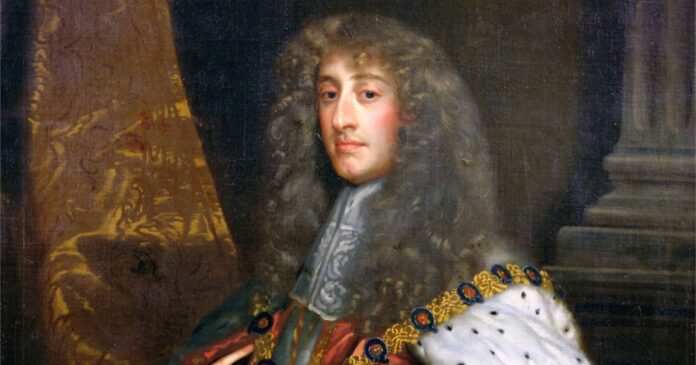
Exiled to France after being deposed by a Protestant coup, could James II, the last Catholic King of England, become a saint?

“If occasion were, I hope God would give me his grace to suffer death for the true Catholic religion.” – King James II of England

The last Catholic of England wasn’t always so. It was during his exile in France, while the Commonwealth ruled and the Monarchy was naught, that he had his first inclinations to the Faith being exposed to the Church’s rich tradition and beliefs.

When his brother and predecessor King Charles II (who he himself became Catholic in a deathbed conversion) made allies of Spain to regain his throne in England, James II was exiled again to Spain, joined the Spanish army, and traveled to Belgium to fight against his now-former French comrades.

During his service in the Spanish army, he befriended two Irish Catholic Royalists (supporters of reinstating the Monarchy in England) in the ranks: Peter Talbot, Archbishop of Dublin who died in prison under the persecution of the Popish plot, and Richard Talbot, who later served James II as Lord Deputy of Ireland during the Jacobite wars.

He began turning toward the Faith further, estranging himself from his brother Charle II’s Anglican advisers while befriending the two Talbot’s. However, it was was his wife Anne Hyde, the daughter of Charles II chief advisor after his reinstatement to the throne, who “made the greatest single impact upon his thinking.” She converted shortly after the Restoration, “almost certainly before her husband,” who himself took the Eucharist sometime in 1668 or 1669 and hence stopped attending Anglican services.

His conversion was made public under the Test Act of 1673 by an English parliament with delusions of papal subterfuge. He refused to disavow transubstantiation and other Church doctrine, also refusing to participate in Anglican “communion.” With his twice refusal, his conversion was made public in a Kingdom hostile to Catholics.

While Charles II didn’t support his conversion, he dissolved Parliament every time they attempted to pass legislation barring his brother’s succession to the throne upon his death, as he had failed to bear any heirs.

When Charles II died from a stroke in 1685, the Duke of York was proclaimed King James II of England and VII of Scotland in a private Catholic coronation at the Palace of Whitehall on April 22nd. In his short three year reign as the last Catholic King of England, he ended institutionalized persecution of the Faithful by Protestants.

He issued Declaration of Toleration, allowing Catholics to hold public office and the right of public worship. He also issued a Declaration of Indulgence which struck down laws penalizing not attending services by the Church of England, permitted non-Anglican worship in private homes or chapels, and abolished religious oaths for public offices. He allowed Catholics to hold positions at the University of Oxford for the first time since the Protestant Revolution, and even tried to change Magdalen College Oxford into a Catholic seminary.

When he bore an heir with his wife, Protestant oligarchs invited William of Orange to usurp the throne. James II fled to France, given refuge by Lous XIV in the château of Saint-Germain-en-Laye where he led an austere penitent life till his death in reparation for the sins of his youth after a failed attempt to retake the crown.

James II died in 1701 and was entombed in the Chapel of St. Edmund in the English Benedictine church on the Rue St. Jacques in Paris. His heart was placed in a silver-gilt locket and given to the convent at Chaillot, his brain was placed in a lead casket and given to the Scots College in Paris. His entrails were placed in two gilt urns and sent to the parish church of Saint-Germain-en-Laye and the English Jesuit college at Saint-Omer.

After his death, many came to the Benedictine church in Paris to pray for his soul. When his body was distributed, the surgeons and bodyguards took small pieces for themselves as “relics,” dipping hankerchiefs in his blood.

From his death and into the 1740s, there were reports of miraculous cures owed to the intercession of James II to which Cardinal Louis Antoine de Noailles attested to the authenticity of. In 1765, Thomas Pennant wrote:

“In a side chapel is the coffin of King James II. A monk showed me several crutches, left by people on whom his deceased Majesty had wrought miraculous cures: all which he said were fully attested by Cardinal Noailles.”

After his death, the Benedictine priory in Paris explored the possibility of his canonization, the same priory of the late John Huddleston who received his brother Charles II into the Faith on his deathbed. In 1734, Archbishop of Paris Charles du Luc opened the cause for canonization of James II, giving him the title Servant of God.

His cause has not advanced since then, but remains open, opening the possibility for his canonization in the future: the last Catholic King of England could become a saint.

Photo credit: Public Domain via Wikimedia Commons
Love uCATHOLIC?
Get our inspiring content delivered to your inbox every morning - FREE!
Pope Francis Calls for Fulton Sheen’s Beatification to Take Place in December

3

The Diocese of Peoria, the hometown of the late soon-to-be saint, announced that Fulton Sheen will be beatified in December.

In July, Pope Francis announced the recognition of a miracle attributed to the intercession of Venerable Servant of God Archbishop Fulton J. Sheen paving the way for his beatification. The miracle involved the inexplicable recovery of James Fulton Engstrom, whose parents prayed to Sheen when he still-born during a home birth in September of 2010.

His parents, Bonnie and Travis Engstrom, sought the intercession of Archbishop Sheen and encouraged others to do the same after their baby was taken to OSF Saint Francis Medical Center in Peoria for emergency treatment.

As physicians were preparing to declare a time of death, his heart started to beat at a normal rate for a healthy newborn, having been without a pulse for over an hour. His parents were told he would have a severe cognitive deficit, unable to ever walk, talk, or feed himself. Yet today, he is a perfectly normal eight year old who likes chicken nuggets, Star Wars, and riding his bike.

On Monday, the Diocese announced with “great joy and thanksgiving” that they received word from the Holy See that Pope Francis set the date for Sheen’s beatification to take place on December 21st at the Cathedral of Saint Mary of the Immaculate Conception in Peoria, Illinois.

“This is the same Cathedral where Sheen was ordained a priest 100 years ago on September 20, 1919. It seems entirely fitting that the Beatification will take place at the end of this 100-year anniversary of his ordination to the priesthood. The Cathedral is also the current resting place for Sheen, who is entombed in a marble vault next to the altar where he was ordained.”

Want to learn more about the Fulton Sheen and his cause for canonization? Visit the official website here.

Love uCATHOLIC?
Get our inspiring content delivered to your inbox every morning - FREE!

Published in the Vatican Newspaper: “An Ancient Prayer of the Knights Templar”

2

Composed by templars in jail falsely accused of heresy, the prayer “might be said by anybody finding himself in a moment of despair and difficulty.”

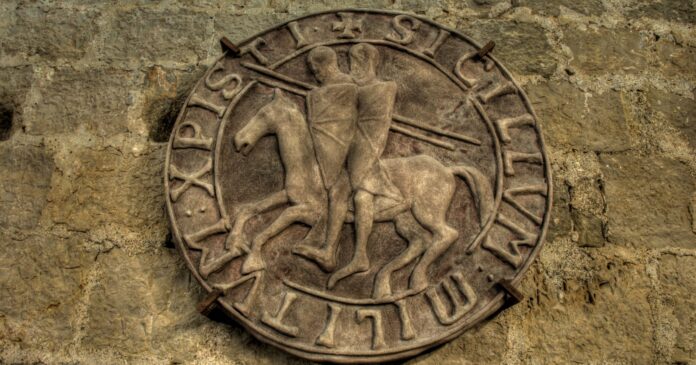
In 2008, the Vatican newspaper L’Osservatore Romano published a 700 year old prayer composed by members of the Order of the Knights Templar while they were “unjustly imprisoned” by King Philip IV of France – who had falsely accused them of heresy to pay off his debts with their wealth.

The prayer appeals to the Virgin Mary to free the order “despite all the lies that have been thrown at us by liars” and guide the order’s enemies toward “truth and charity.”

According to Barbara Frale, author of the article and researcher who studied the documents from the Vatican Secret Archives with the prayer, it “may said by anybody finding himself in a moment of despair and difficulty.” The documents also showed that “the accusations of heresy were groundless.”

Interested in learning what happened to the wealth of the Knights Templar? Click here to find out.

An Ancient Prayer of the Knights Templar

“May the grace of the Holy Spirit be present with us. May Mary, Star of the Sea, lead us to the harbor of salvation. Amen.

Lord Jesus, Holy Father, eternal God, omnipotent, omniscient Creator, Bestower, kind Ruler and most tender lover, pious and humble Redeemer; gentle, merciful Savior, Lord! I humbly beseech The and implore Thee that Thou may enlighten me, free me and preserve the brothers of the Temple and all Thy Christian people, troubled as they are.

Thou, O Lord, Who knowest that we are innocent, set us free that we may keep our vows and your commandments in humility, and serve Thee and act according to Thy will. Dispel all those unjust reproaches, far from the truth, heaped upon us by the means of tough adversities, great tribulations and temptations, which we have endured, but can endure no longer.

Omnipotent, eternal God, who hast so loved the blessed John the Evangelist and Apostle, that he reclined upon Thy bosom at the Last Supper, and to whom Thou revealed and showed the Mysteries of Heaven, and to whom, while suspended on the Holy Cross, for the sake of our redemption, Thou commended Thy most Holy Mother and Virgin, and in whose honor our Order was created and instituted; through Thy Holy mercifulness, deliver us and preserve us, as Thou knowest that we are innocent of the crimes that we are accused of, so that we may take possession of the works, by which we may be guided to the joys of Paradise, through Jesus Christ our Lord. Amen.”

Photo credit: Sunux / Shutterstock.com
Love uCATHOLIC?
Get our inspiring content delivered to your inbox every morning - FREE!

The Virgin’s Girdle: A Little-Known Relic of Mary

40

Although a majority have been lost to history, some of the earliest relics of the Church still survive to this day. Those associated with Jesus Christ and Mary have been the most studied and fascinating of them all.

Some of these include the Holy Sponge, True Cross, Holy Robe, Holy Lance, and Holy Prepuce. While many are familiar with these relics, most are probably unfamiliar with the Virgin’s Girdle.

The Virgin’s Girdle

At the end of her earthly life, Mary was taken into Heaven corporeally, meaning relics available for veneration must come from before the Assumption.

“The Immaculate Virgin, preserved free from all stain of original sin, when the course of her earthly life was finished, was taken up body and soul into heavenly glory.” – Catechism of the Catholic Church 966

According to pious tradition, Saint Thomas the Apostle was traveling back from India at the time of the Assumption. Not only did he miss the post-Resurrection appearance of Jesus to the other apostles, he missed the Assumption.

Aware of his skeptical nature given the doubting Thomas episode, Mary appeared to him personally and dropped down from the skies the girdle she was wearing as physical proof of what he had witnessed, evidence for the other apostles.

The account is testified to in the Golden Legend, by Blessed Jacobus, written around 1260 A.D.:

“And St. Thomas was not there, and when he came he would not believe this. And anon the girdle with which her body was girt came to him from the air, which he received, and thereby he understood that she was assumpt into heaven.”

During the 14th century, the Prato Cathedral nearby the city of Florence of Tuscany came into possession of the Virgin’s Girdle, also known as the Girdle of Thomas, Holy Belt, or Sacra Cintola.

Afterwards, the relic became a key feature of Florentine art, especially depictions of the Madonna del Parto, depictions of pregnant Mary from the Tuscany region popular during the 14th century.

Today, the Holy Belt is held in the Cappella del Sacro Cingolo, Chapel of the Sacra Cintola, in the Prato Cathedral, folded in reliquary. It is exhibited five times annually: on September 8th, the birthday of Mary and during other feast days.

Photo credit: Gwilbor, via Wikimedia Commons
Love uCATHOLIC?
Get our inspiring content delivered to your inbox every morning - FREE!
The Holy Prepuce: A Lesser Known Relic of Jesus Christ

1

Although a majority have been lost to history, some of the earliest relics of the Church still survive to this day. Those associated with Jesus Christ Himself have been the most studied and fascinating of them all.

Some of these include the Holy Sponge, True Cross, Holy Robe, and Holy Lance. While most are familiar with these relics, many are probably unfamiliar with the Holy Prepuce.

The Holy Prepuce

Christ ascended into Heaven corporeally, meaning parts of His body available for veneration must come from before the Ascension. The Holy Prepuce is just that, a product of the circumcision of Jesus.

“When eight days were completed for his circumcision, he was named Jesus, the name given him by the angel before he was conceived in the womb.” – Luke 2:21

Christ was circumcised in accordance with Jewish law, in a ceremony eight days after birth where He was given His name. The apocryphal Syriac Infancy Gospel contains the first reference to the survival of the Holy Prepuce.

“And when the time of his circumcision was come, namely, the eighth day, on which the law commanded the child to be circumcised, they circumcised him in a cave. And the old Hebrew woman took the foreskin, and preserved it in an alabaster-box of old oil of spikenard.” Syriac Infancy Gospel 5

The Holy Prepuce makes its first appearance in antiquity on Christmas in 800 A.D., as a gift from Charlemagne to Pope Leo III when the latter crowned the former Emperor. Charlemagne himself received it as a wedding gift from Byzantine Empress Irene.

The Descriptio laternansis Ecclesia, written shortly before 1100, described a chest commissioned by Leo III placed under the altar in the Sancta Sanctorum at the Lateran Palace containing a gold jeweled cross. In this cross was the foreskin and umbilical cord of Jesus. In the late fourteenth century, Saint Bridget of Sweden had a vision from the Virgin Mary in which she was told the Holy Prepuce held at the Vatican was authentic.

In 1527 during the Sack of Rome, a German soldier looted the Sancta Sanctorum and took the Holy Prepuce. He was later captured and imprisoned in Calcata, a town about 30 miles north of Rome. He hid the reliquary in his cell and it was later discovered in 1557. From there on it was venerated, and the Church offered an indulgence to it’s pilgrims.

Calcata would stage an annual procession of the Holy Prepuce on the Feast of the Circumcision of Christ, now known in the Roman calendar as the Octave Day of the Nativity of the Lord. However in 1983 it was lost: parish priest Father Dario Magnoni announced,

“This year, the holy relic will not be exposed to the devotion of the faithful. It has vanished. Sacrilegious thieves have taken it from my home.”

In 1900, the Vatican threatened excommunication for anyone to speak on the authenticity of any relic purported to be the Holy Prepuce, and thus Magnoni remained mum about the Calcata relic until his death.

Photo credit: PD via Wikimedia Commons
Love uCATHOLIC?
Get our inspiring content delivered to your inbox every morning - FREE!